


 Back to all blogs
Active vs Passive Diffusion: Essential Oils Guide
You searched active vs passive diffusion because the names sound simple, but the choice is not always obvious. One method fills a room fast, while the other stays quiet and soft.
If you feel stuck choosing between them, you are not alone. Many essential oil users want a clear answer on active vs passive diffusion before they spend money or set up a daily ritual.
This topic works best as a comparison post. Most people want the difference, the pros, the limits, and which option fits their space and routine.
Table of Contents:
- What Active And Passive Diffusion Mean
- Active vs Passive Diffusion At A Glance
- How Active Diffusion Works In Real Life
- How Passive Diffusion Works In Real Life
- Which One Smells Stronger
- Best Uses For Active Diffusion
- Best Uses For Passive Diffusion
- Maintenance And Cleanup
- What Science Can Teach Us About Diffusion
- A Helpful Biology Side Note
- Does Either Method Affect Wellness Better
- How To Choose The Right Option For Your Home
- Common Mistakes People Make
- A Quick Word On Safety And Comfort
- Why This Comparison Matters Beyond Diffusers
- Who Should Choose Active Diffusion
- Who Should Choose Passive Diffusion
- Conclusion
What Active And Passive Diffusion Mean
Active diffusion uses a device to push scent into the air. Passive diffusion lets oil evaporate on its own with no motor, no fan, and no mist.
That one difference shapes almost everything else. It affects scent strength, room coverage, maintenance, portability, and how much control you have.
In essential oil use, active diffusion usually means an ultrasonic or nebulizing diffuser. Passive diffusion usually means a porous stone, wood diffuser, felt pad, or another absorbent surface.
If you want a quick picture, think of active diffusion as switching on a speaker. Think of passive diffusion as placing a scented object near you and letting it speak softly.
These terms also borrow from biology. In membrane transport, passive transport and active transport describe how transport molecules cross the cell membrane and other cell membranes.
In that science setting, passive movement follows concentration gradients. Active transport moves substances against their respective gradients and requires energy, often from adenosine triphosphate.
Active vs Passive Diffusion At A Glance
| Feature | Active Diffusion | Passive Diffusion |
|---|---|---|
| How it works | Uses a machine to disperse oil | Lets oil evaporate naturally |
| Scent strength | Stronger and faster | Softer and slower |
| Best for | Larger rooms and quick scent throw | Small spaces and gentle aroma |
| Power needed | Usually yes | No |
| Water needed | Often yes with ultrasonic models | No |
| Portability | Varies by model | Very easy to move |
| Control | More settings and timers | Less control |
| Maintenance | Regular cleaning needed | Light cleaning needed |
| Biology comparison | Closer to active transport requires energy. | Closer to simple diffusion or passive movement. |
That is the quick answer most people need. But the best choice depends on how you live, not just how the device works.
How Active Diffusion Works In Real Life
Active diffusers move aroma into the air on purpose. They do not wait for natural evaporation to do all the work.
Ultrasonic models use high frequency vibration and water to make a fine mist. That mist helps spread essential oil across the room fairly fast.
This is why active diffusion feels stronger almost right away. You add water, add drops, press a button, and the room starts to change.
For people who want a bigger scent experience, this method often feels more satisfying. It can also make a room feel more intentional, especially in the morning or after a long day.
Some active systems work like a mini air-delivery setup. In a loose analogy to biology, they act more like membrane proteins helping transport substances than scent sitting still on a stone.
Why People Like Active Diffusers
- They spread scent quickly.
- They work well in medium and large rooms.
- They often include timers and mist settings.
- Many have soft lights for evening use.
- You can control how long and how strong the aroma feels.
If you want a living room to smell fresh before guests arrive, active diffusion makes sense. If you want your bedroom routine to feel a little spa-like, it can also be a solid fit.
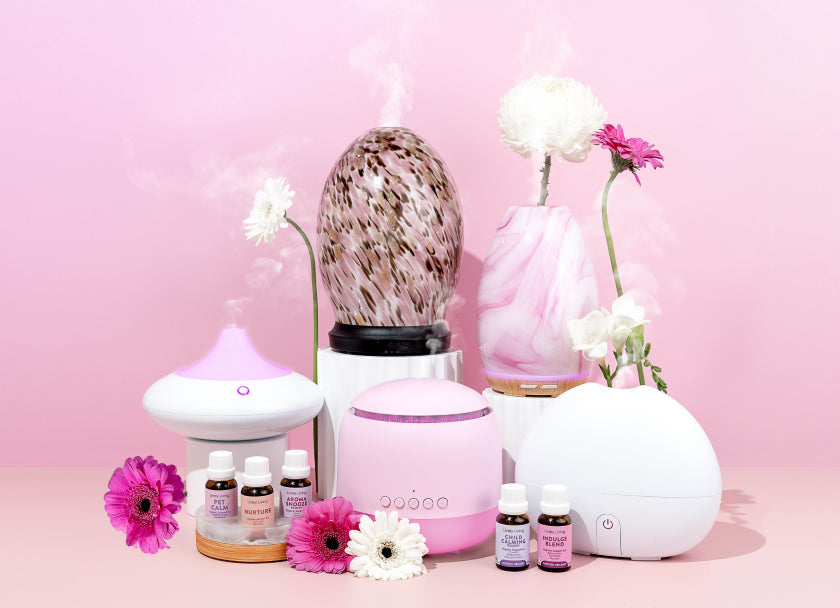
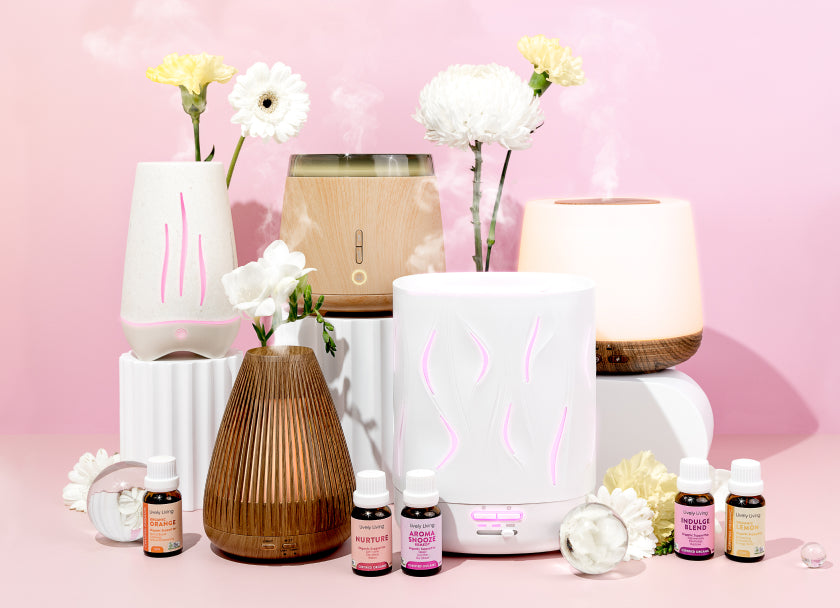
Some brands offer glass and ceramic options that feel more like decor than gear. That matters because no one wants an ugly gadget stealing attention from a calm room.
How Passive Diffusion Works In Real Life
Passive diffusion is simpler. You place a few drops of oil on a porous item, and the scent slowly evaporates.
No cord. No water. No button. No low hum in the background.
This method gives you a lighter scent cloud close to where the diffuser sits. That is why it works best on a desk, bedside table, bathroom shelf, or in a car.
It is easy to like passive diffusion because it asks very little from you. It quietly does its job without trying to take over the whole room.
From a science view, this lines up more closely with simple diffusion. Molecules spread from a high concentration area near the oil source into lower concentration air nearby.
Why People Like Passive Diffusers
- They are simple to use.
- They need no power.
- They travel well.
- They suit smaller spaces.
- They create a gentle scent that is less likely to feel heavy.
If you are sensitive to strong smells, passive diffusion may feel much better. If you work at a desk all day, this can also give you a calm pocket of aroma without taking over the whole room.
Gypsum stone and wood styles are common because they absorb oils well and release them slowly. That makes them practical and easy on the eyes.
Which One Smells Stronger
Active diffusion wins this one, and it is not close. It sends more aroma into the air and does it much faster.
Passive diffusion smells softer because the oil evaporates at its own pace. You notice it most when you sit or stand near it.
This is where many buying mistakes happen. Someone wants a large room filled with scent, buys a tiny passive stone, and then wonders why it feels weak.
The opposite happens too. Someone wants a small hint of lavender by the bed, turns on a strong active diffuser, and now the room smells far too intense.
So ask yourself one simple question. Do you want the room scented, or do you want a little zone around you scented?
Best Uses For Active Diffusion
Active diffusion shines in spaces where scent needs to spread. It works well when the room is open, busy, or used by more than one person.
- Living rooms.
- Open plan spaces.
- Entryways.
- Yoga rooms.
- Evening wind down rituals.
It also works well when you want control. Many units let you choose run times, mist modes, and light levels.
That matters more than people think. You may want a stronger setting in the morning and a lighter one at night.
If routine matters to you, active diffusion gives you that sense of structure. Press the button, breathe deeper, and your day gets a clear shift.
Best Uses For Passive Diffusion
Passive diffusion does its best work in quiet corners. It suits spaces where strong scent would feel like too much.
- Bedside tables.
- Desks and work areas.
- Bathrooms.
- Cars.
- Closets and drawers.
This is the kind of diffuser you forget is there until a soft note of citrus or wood drifts by. That soft effect is the whole point.
Passive diffusion is also useful if you do not want one more thing plugged in. Some days, less equipment just feels better.
Maintenance And Cleanup
Active diffusers need more care. Water-based units should be cleaned often so residue does not build up.
If oil and water sit too long, the unit may not perform well. Many brands suggest regular rinsing and wiping after use.
Passive diffusers are easier. A quick dusting helps, and a gentle wipe with diluted vinegar can freshen the surface before a new oil.
Heavier oils tend to linger longer on passive materials. Think patchouli, sandalwood, or frankincense.
Lighter citrus oils usually fade faster. That pattern matches how diffusion occurs in general, with particles moving from a higher concentration to a lower concentration over time.
For a broader explanation of passive transport, you can read passive transport explained at Conduct Science. The article is about cells, but the concentration idea helps make scent behavior easier to understand.
What Science Can Teach Us About Diffusion
To be clear, essential oil room diffusion is not the same as cell transport in biology. Still, the basic contrast between active and passive is helpful.
In biology, passive transport moves substances down concentration gradients and does not require energy. You can read a plain-language comparison at Diffen and a broader overview on passive transport.
Active transport is different because transport requires energy to move materials against an electrochemical gradient. A helpful overview appears at Biology LibreTexts.
Inside the cell membrane, membrane proteins may act as ion channel structures, pumps, or carrier proteins. These systems move sodium ions, potassium ions, amino acids, water molecules, and other transport molecules across the phospholipid bilayer.
Primary active transport uses ATP directly. Primary active transport examples include the sodium-potassium pump, also called the sodium potassium pump or potassium pump, which helps maintain sodium concentration and intracellular sodium balance while moving potassium ions.
Secondary active transport uses gradient energy stored from another ion difference. Secondary active and secondary active transport systems include linked movement such as the sodium-calcium exchanger, where one substance helps drive the uphill movement of another.
By contrast, simple diffusion and facilitated diffusion do not use ATP. In called facilitated diffusion, carrier proteins or an ion channel help transport substances down their respective gradients without energy stored from ATP being spent directly.
This science does not mean your diffuser has a cell membrane. It simply gives a memorable frame: active transport requires energy, while passive movement does not.
A Helpful Biology Side Note
Water movement through membranes is often explained with osmosis. If you want a quick refresher, The Degree Gap has an easy read.
These transport examples also explain why cells maintain balance so carefully. Changes in water concentration, sodium concentration, or calcium ion movement can affect action potential signaling and normal action potentials in nerves and muscles.
Conditions such as cystic fibrosis are also linked to membrane transport problems. Again, you do not need cell biology to pick a diffuser, but the language becomes a lot clearer once you see how transport passive and active systems differ.
Does Either Method Affect Wellness Better
This is where honesty matters. The diffuser style does not automatically decide your result.
The oil itself, the amount used, the room size, airflow, and your own scent tolerance all matter. So does your mood, which is a major piece many people skip.
Some people relax better with a soft nearby aroma. Others need a room filled with scent before they feel any shift.
There is also growing research around nutrition, mood, and health patterns, like the work linked through this 2025 DOI entry. That does not prove a diffuser type works magic, but it does show that body responses are layered.
So be careful with big claims. The right diffuser is usually the one you enjoy enough to use often and sensibly.
How To Choose The Right Option For Your Home
You do not need a fancy formula. You just need a few honest answers.
- Think about room size.
- Think about how strong you like scent.
- Think about how much cleanup you can tolerate.
- Think about whether you want portability.
- Think about whether other people share the space.
If your space is large and you want quick fragrance, choose active diffusion. If your space is small and you want something softer, passive diffusion is usually enough.
If you like gadgets and settings, active is often more fun. If you like simple and low fuss, passive may win fast.
| Your Situation | Better Fit | Why |
|---|---|---|
| Large living room | Active diffusion | Better coverage and stronger scent throw. |
| Desk or bedside use | Passive diffusion | Gentle scent close to you. |
| You want timers | Active diffusion | More settings and control. |
| You travel often | Passive diffusion | No outlet, water, or setup needed. |
| You dislike maintenance | Passive diffusion | Less cleanup and fewer parts. |
Common Mistakes People Make
The first mistake is matching the wrong diffuser to the wrong room. A tiny passive diffuser will not do much in a large open space.
The second mistake is using too much oil. More drops do not always mean a better experience.
The third mistake is skipping cleaning. Old oil buildup can muddy the scent and make even great oils smell flat.
The fourth mistake is choosing based on looks alone. A beautiful diffuser that does not fit your routine becomes shelf decor very fast.
A Quick Word On Safety And Comfort
Gentle use matters. Strong scent can feel nice to one person and way too much to another.
Start small, especially in bedrooms, small offices, and shared spaces. It is easier to add more than to wish you had used less.
Ventilation also matters. Fresh air keeps things comfortable, especially with active diffusion.
If kids, pets, or sensitive adults share the home, pay close attention to oil choice and strength. The softer nature of passive diffusion can feel easier to manage in some cases.
Why This Comparison Matters Beyond Diffusers
People are drawn to active versus passive choices in many parts of life. Investing has this contrast too, as shown in Forbes pieces on active vs investing strategies and active vs approach selection.
Even storytelling talks about action versus response. That theme shows up in active vs behavior.
People want to know if they should push for results or let things unfold more naturally. That same instinct shows up in diffuser shopping too.
Some days you want bold, immediate atmosphere. Other days you want a soft scent that sits beside you and minds its business.
Who Should Choose Active Diffusion
Choose active diffusion if you want noticeable scent across a room. It fits people who enjoy stronger aroma and like more control.
It also suits people who already have a set ritual. Morning focus blends and evening wind-down blends work well with timers and mist settings.
If your home feels busy, this kind of diffuser can shift the mood quickly. That fast change is its biggest strength.
It may also fit you better if you want results similar to how active transport moves materials with help rather than waiting for passive spread. The comparison is loose, but the idea sticks.
Who Should Choose Passive Diffusion
Choose passive diffusion if you want something easy, portable, and quiet. It suits people who want scent nearby, not everywhere.
It is also great if you want less setup. A few drops on stone or wood is about as low effort as it gets.
If strong aroma tends to bother you, this gentler path often feels much more livable. Quiet wins sometimes.
Passive options also fit people who like a subtle routine. They are easy to move from a nightstand to a work desk to a car cup holder with almost no effort.
Conclusion
Active vs passive diffusion comes down to one thing. Do you want scent pushed through the room, or softly released around you.
Active vs passive diffusion is less about right or wrong and more about fit. Active gives speed, reach, and control, while passive gives ease, softness, and simplicity.
The biology side helps the comparison click. Passive transport, simple diffusion, and facilitated diffusion move with concentration gradients, while active transport requires energy to push against them.
That same basic contrast explains why active diffusers feel stronger and why passive options feel gentler. One method adds mechanical help, and the other lets scent move more naturally.
If you want a clear starting point, go active for larger spaces and go passive for smaller personal spaces. That one rule solves most of the confusion.
And if you are still torn, start with the way you live. Your best diffuser is the one that feels easy to use on ordinary days, because that is the one you will actually keep using.


