



 Back to all blogs
Best Nasal Aspirator for Congested Babies: A Buying Guide
Updated October 2026 · Reviewed for safety and accuracy by the Lively Living team
When your baby is blocked up and miserable, you want something that clears their nose quickly, gently and without a fuss. Nasal aspirators come in a few different styles, and the right one depends on how often you'll use it, how easy it is to clean and how much your little one wriggles. This buying guide walks you through the types, the features worth paying for and what to look for before you buy.
Table of Contents:
- Types of nasal aspirators
- Comparing the types at a glance
- Features to look for
- What we like about our nasal aspirator
- Tips for using a nasal aspirator
- Comforting a congested baby
- Frequently asked questions
Types of nasal aspirators
Bulb syringe
The simple rubber bulb many families bring home from hospital. You squeeze out the air, rest the tip at the nostril and release. Bulb syringes are cheap and need no power, but suction is hard to control, and because you can't see or easily dry the inside, they can harbour mould over time.
Parent-powered (oral) aspirator
A soft nostril tip connected by a tube to a mouthpiece. You create the suction with your own breath, so you're in full control of how strong it is. A disposable filter sits in between. They work well and are easy to wash, but you'll need a steady supply of filters, and some parents simply don't love the idea.
Electric aspirator
Press a button and the device does the suction for you, with steady, consistent pressure. Electric aspirators are the quickest option and leave you with a free hand to hold your baby. Rechargeable models save you buying batteries. They cost more up front, but they're the most convenient choice for frequent use and night-time wake-ups.

Comparing the types at a glance
| Type | Suction | Cleaning | Ongoing costs | Best for |
|---|---|---|---|---|
| Bulb syringe | Hard to control | Difficult to dry inside | None | Occasional use, a backup in the nappy bag |
| Parent-powered | You control it | Easy, comes apart | Replacement filters | Parents who want full control |
| Electric (rechargeable) | Steady and consistent | Easy, washable parts | None | Frequent use, night-time and busy families |
Features to look for
- Soft, medical-grade silicone tips shaped to rest at the opening of a tiny nostril, not go inside it.
- Gentle, steady suction, ideally with more than one level. You want enough to clear mucus without needing to hold the tip in place for long, and a low setting for newborns.
- Easy cleaning. Parts that come apart, can be washed in warm soapy water and dry fully.
- Quiet operation. A quieter motor is less likely to startle your baby.
- Rechargeable power. No hunting for batteries at 2am.
- One-handed use. Simple controls leave your other hand free to keep your baby steady.
- Australian approval. Check whether the device is listed on the Australian Register of Therapeutic Goods (ARTG).
- Spare tips, so each child can have their own.
What we like about our nasal aspirator
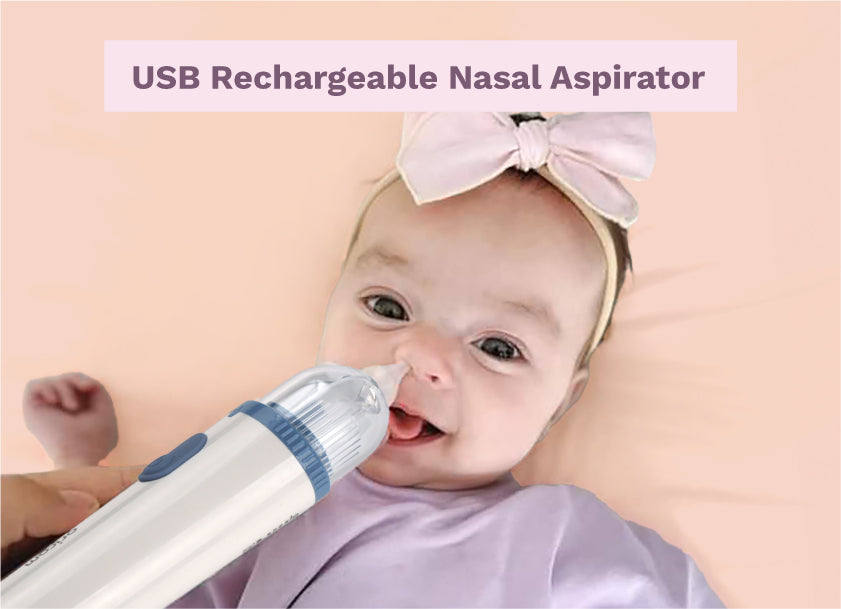
We chose our USB Rechargeable Nasal Aspirator to tick every box on the list above:
- listed on the Australian Register of Therapeutic Goods as a medical device
- two soft, flexible silicone tips included
- quiet, one-touch operation
- two suction levels, a gentle low setting for newborns and a stronger setting for thicker mucus
- USB rechargeable, so there are no batteries to buy
- washable parts with no replacement filters needed
- comes with a bonus organic Kiddy Calm Balm
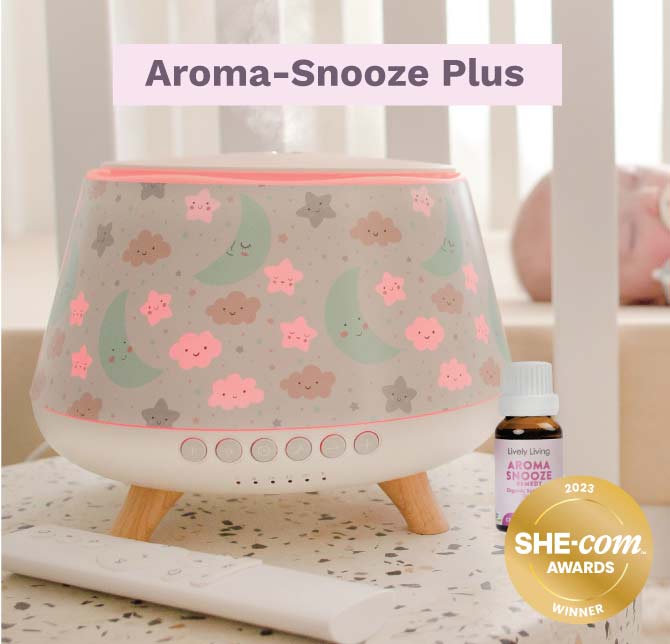
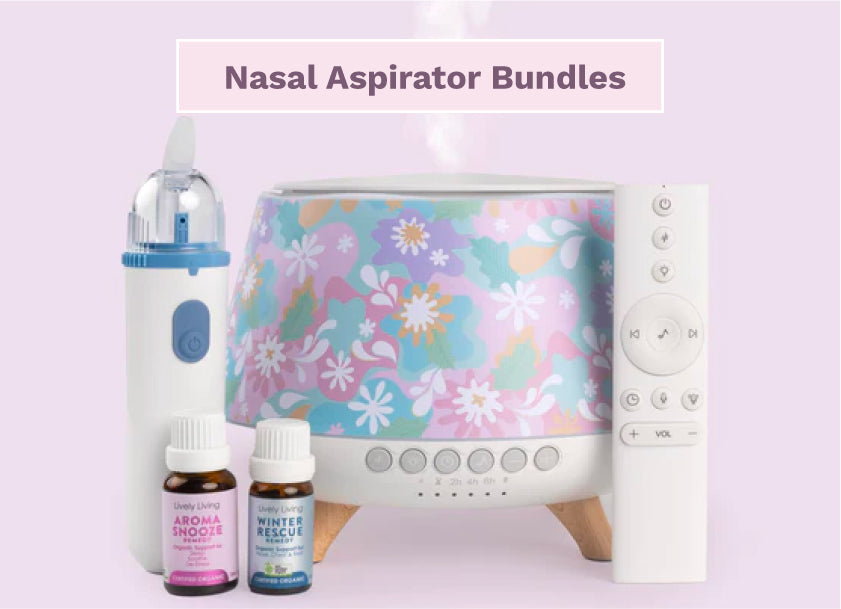
For a complete kit for cold and flu season, our nasal aspirator bundles pair the aspirator with the Aroma-Snooze Plus humidifier, night light and sound machine, or the Snooze Fairy white noise machine, plus organic oils.
Comparing specific brands? See our Oricom vs Snotty Boss nasal aspirator comparison.
Tips for using a nasal aspirator
- Put 1 to 2 drops of saline nasal drops in each nostril first and wait 30 to 60 seconds to soften the mucus.
- Rest the tip at the opening of the nostril. Never push it into the nose.
- Clear the nose before feeds and before sleep, and generally no more than 3 to 4 times a day.
- Wash and air dry the aspirator after every use.
Our step-by-step guide to using a nasal aspirator covers technique, cleaning, common myths and when to see a doctor.
Comforting a congested baby
- Keep sleep flat and safe. Always put your baby to sleep on their back on a firm, flat mattress. Don't raise the head of the cot or use pillows or wedges. Red Nose has the full safe sleeping guidelines.
- Offer smaller, more frequent feeds so your baby can take breaks to breathe.
- Run a cool mist humidifier in the nursery to keep the air comfortable, out of reach and cleaned regularly.
- Lots of cuddles and patience. Colds in babies usually clear up within 7 to 10 days.
See your GP if your baby is under 3 months with a fever of 38°C or more, is feeding much less than usual, or the congestion lasts more than 10 days. Call 000 if your baby is struggling to breathe, has blue lips or is very drowsy. healthdirect has more on blocked noses.
Frequently asked questions
What is the best type of nasal aspirator for a newborn?
Any type can be used from birth if it has a soft tip and gentle suction. Many parents find a quiet electric aspirator easiest because it gives steady suction and leaves a hand free to hold a tiny baby.
Are electric nasal aspirators safe?
Yes, when used as directed: saline first, the tip resting at the opening of the nostril, and only when needed. Look for one listed on the ARTG.
Is a bulb syringe good enough?
For the odd blocked nose, it can do the job. For frequent use, a parent-powered or electric aspirator gives better control and is much easier to keep clean.
How long will I need a nasal aspirator?
Until your child can blow their own nose, usually somewhere between 2 and 4 years of age.
The best nasal aspirator is the one you'll reach for confidently at 2am: gentle, quick, quiet and easy to clean. Choose well, and those snuffly nights get a whole lot easier for everyone.
Related reading
- Nasal aspirators for babies: benefits, how to use and safety tips
- Oricom vs Snotty Boss nasal aspirator: which is best for baby?
- Newborn nose cleaners: a guide for parents
- How to clear a congested baby's nose for feeding
Yours in health and happiness
Julie and the Lively Living team


