


 Back to all blogs
Newborn Nose Cleaner: A Comprehensive Guide for Parents
Updated October 2026 · Reviewed for safety and accuracy by the Lively Living team
It's 3am, your newborn is snuffling and struggling to feed, and you're wondering how on earth you clear a nose that tiny. A "newborn nose cleaner" is something most of us never think about until we need one. This guide compares the main types, from saline drops to bulb syringes and electric aspirators, explains how to use each one safely, and covers what to look for when you buy.
Table of Contents:
- Why newborns need help clearing their nose
- Types of newborn nose cleaners
- How to use saline drops
- How to use an aspirator or bulb syringe
- Safety tips
- What to look for when you buy
- Frequently asked questions
Why newborns need help clearing their nose
Newborns breathe mainly through their nose and have very narrow nasal passages, so a little mucus can make them sound blocked. Snuffles and sneezes are common in the first weeks and usually nothing to worry about if your baby is feeding well. Babies can't blow their own nose, though, so when a cold or dry air leaves them congested, a little help before feeds and sleep can make a real difference. Our guide to clearing a newborn's congested nose covers the causes and warning signs in more detail.
Types of newborn nose cleaners
Saline drops and sprays
Saline is sterile salt water. It loosens and thins mucus so it's easier to remove, and it's gentle enough to use from birth. Drops are usually easier than sprays for newborns, as a spray can startle them. Buy saline from your pharmacy in single-use vials or a dropper bottle.
Bulb syringes
A simple rubber bulb with a narrow tip. You squeeze out the air, place the tip at the nostril and release to create suction. They're cheap and need no batteries, but the suction is hard to control and many bulbs can't be opened, so they're difficult to clean and dry properly inside.
Electric nasal aspirators
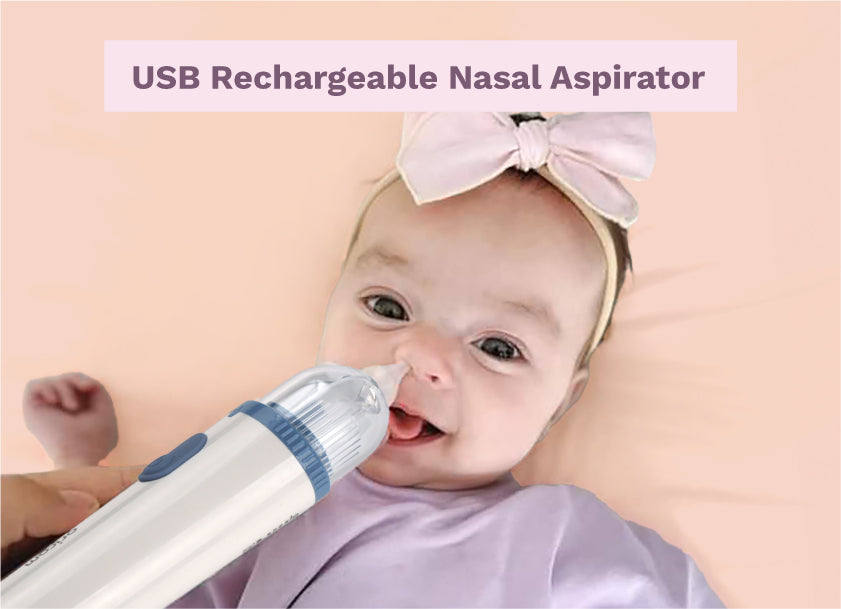
An electric aspirator does the suction for you, with steady, consistent pressure, so you can keep one hand free to steady your baby. The parts come apart for washing. Our rechargeable nasal aspirator has simple one-touch operation, two suction levels, two soft, flexible silicone tips and washable parts, and charges by USB so it's ready for night-time wake-ups.

Manual (mouth) aspirators
A tube with a soft tip for your baby and a mouthpiece for you, with a filter in between. You control the suction with your own breath. Some parents love them; others prefer not to.
For a side-by-side comparison, see our nasal aspirator buying guide.
How to use saline drops
Step 1. Wash your hands.
Step 2. Lay your baby on their back. Swaddling can help keep little hands out of the way.
Step 3. Put 1 to 2 drops of saline into each nostril.
Step 4. Wait 30 to 60 seconds for the saline to loosen the mucus. Your baby may sneeze some of it out on their own.
Step 5. Gently remove the loosened mucus with an aspirator, and wipe around the nose with a soft, damp cloth.
We recommend pharmacy saline rather than making your own for newborns, as homemade solutions are easy to get too salty and aren't sterile.
How to use an aspirator or bulb syringe
Step 1. Use saline first to loosen the mucus.
Step 2. For an electric aspirator, check it is charged and choose the low suction setting. For a bulb syringe, squeeze the air out before you bring it to your baby's nose.
Step 3. Hold the soft tip at the opening of one nostril, never pushing it inside.
Step 4. Apply gentle suction for a few seconds (or slowly release the bulb), then remove the tip. Repeat on the other side.
Step 5. Wash the tip and any collection parts in warm, soapy water and let them air dry completely.
Our step-by-step nasal aspirator guide has more tips, and if feeds are the main struggle, read how to clear a congested baby's nose for feeding.
Safety tips
- Be gentle and don't overdo it. Clearing the nose more than a few times a day can irritate the delicate lining. Before feeds and sleep is usually enough.
- Never insert anything into the nostril, including cotton buds.
- Keep it clean. Wash all parts after every use and give each child their own tip.
- Look after the skin. If the skin around your baby's nose gets red or dry, a little baby-safe moisturiser can soothe it.
- No medicated drops or oils. Don't use decongestant drops, cough and cold medicines, vapour rubs or essential oils on newborns unless your doctor advises it. For babies under 3 months, saline, an aspirator and comfortable air are the safest options.
- Know when to get help. Call 000 if your baby is working hard to breathe, has blue or pale lips, or is very drowsy. See your GP if they're feeding poorly, have fewer wet nappies, or are under 3 months with a temperature of 38°C or more.
Keeping the air comfortable
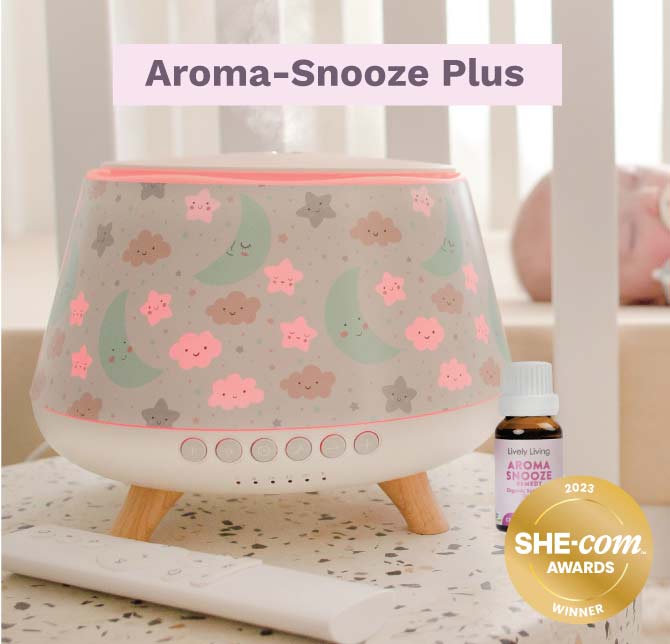
Dry air from heating and air conditioning can make congestion worse. A cool mist humidifier in the nursery keeps the air comfortable for stuffy nights. Our award-winning Aroma-Snooze Plus combines a cool mist humidifier with soothing sounds and a soft red night light. Use it with plain water for newborns, and read are humidifiers safe for newborns? for tips on using one safely.

What to look for when you buy
- Soft, rounded silicone tips in a couple of sizes, so they sit gently at the nostril.
- Two suction levels, so you can start gently with a newborn.
- Parts that come apart for thorough washing and drying.
- Rechargeable battery, so you're never hunting for batteries at 3am.
- Quiet operation, which makes it less likely to upset your baby.
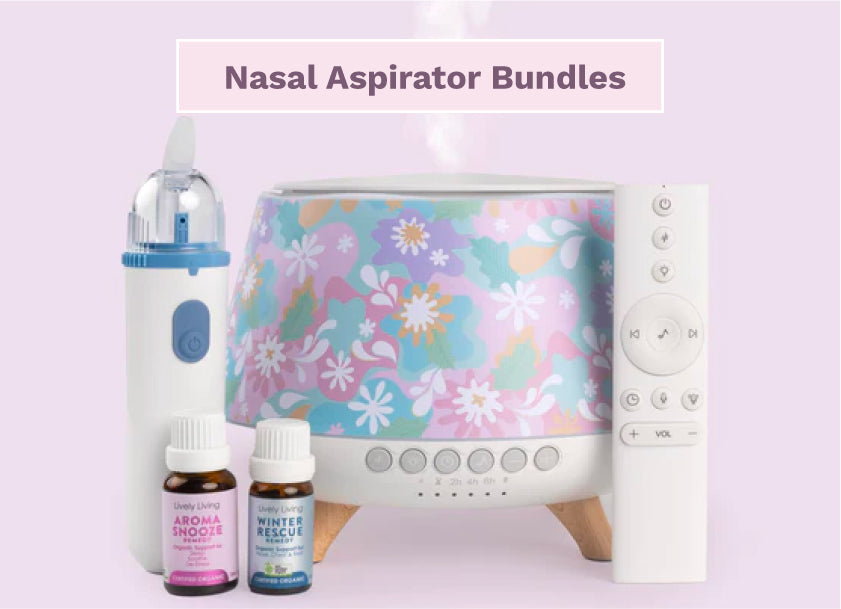
Want everything for cold season in one go? Our Sniffle Survival Bundle includes the Aroma-Snooze Plus, a rechargeable nasal aspirator and organic oils for when your baby is older.
Frequently asked questions
What can I use to clean my newborn's nose?
Saline drops to loosen the mucus, then a gentle nasal aspirator or bulb syringe to remove it. Wipe the outside of the nose with a soft, damp cloth.
Is it OK to clean a newborn's nose?
Yes, as long as you're gentle and don't overdo it. Before feeds and sleep is usually enough.
How can I unblock my newborn's nose naturally?
Saline drops followed by gentle suction, plus comfortable, moist air in the nursery. Avoid essential oils and vapour rubs for babies under 3 months.
How do I flush my baby's nose?
Babies don't need a full nasal flush. A few drops of saline in each nostril, followed by gentle suction, does the job.
The bottom line
Saline drops and a gentle nasal aspirator are all most parents need to keep a newborn's nose clear. Choose a nose cleaner that's easy to control and easy to clean, use it before feeds and sleep, and keep an eye out for any signs that your baby needs a doctor.
Related reading
- Nasal aspirators for babies: benefits, how to use and safety tips
- Best nasal aspirator for congested babies: a buying guide
- Clearing a newborn's congested nose: practical solutions
- Are humidifiers safe for newborns?
Yours in health and happiness
Julie and the Lively Living team


