
Gifting has never been easier
Perfect if you're short on time or are unable to deliver your gift yourself. Enter your message and select when to send it.

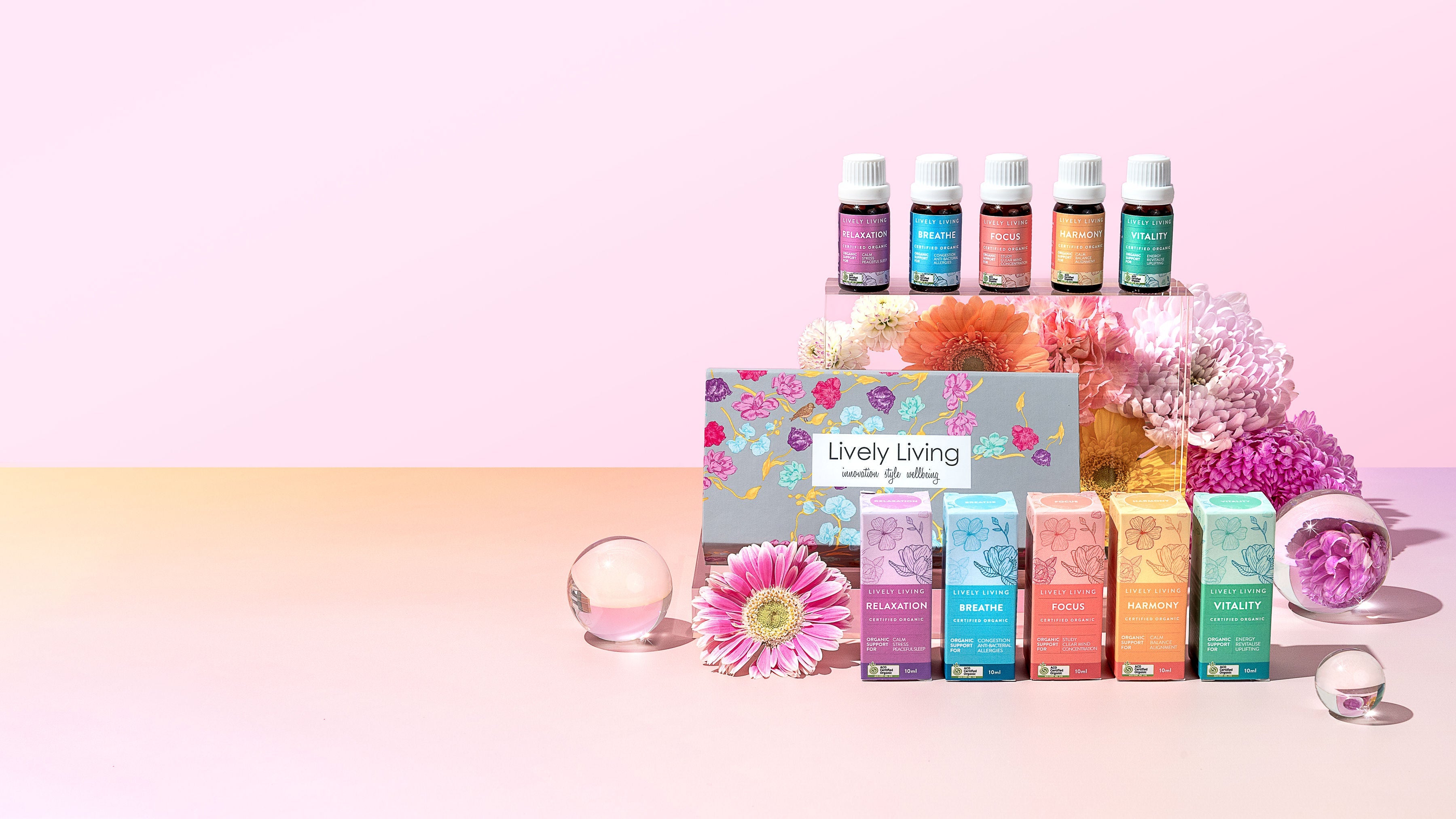

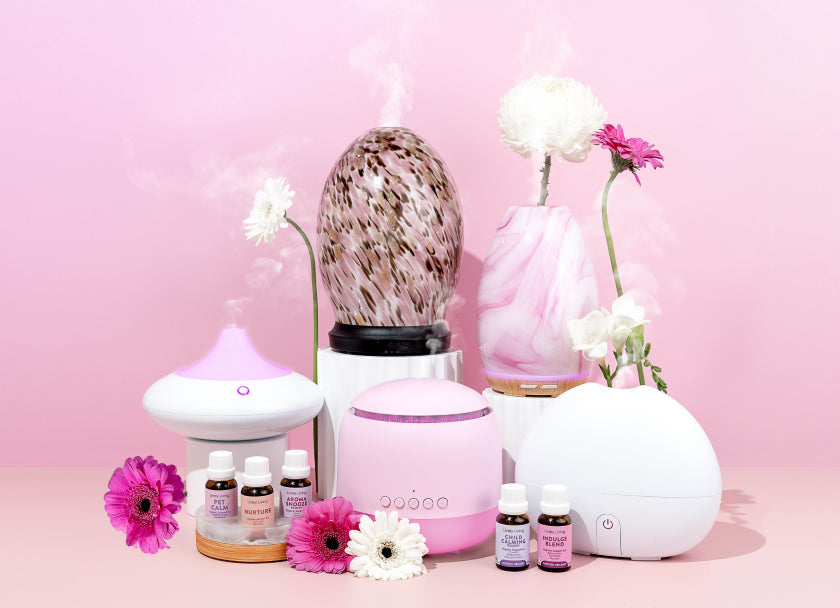
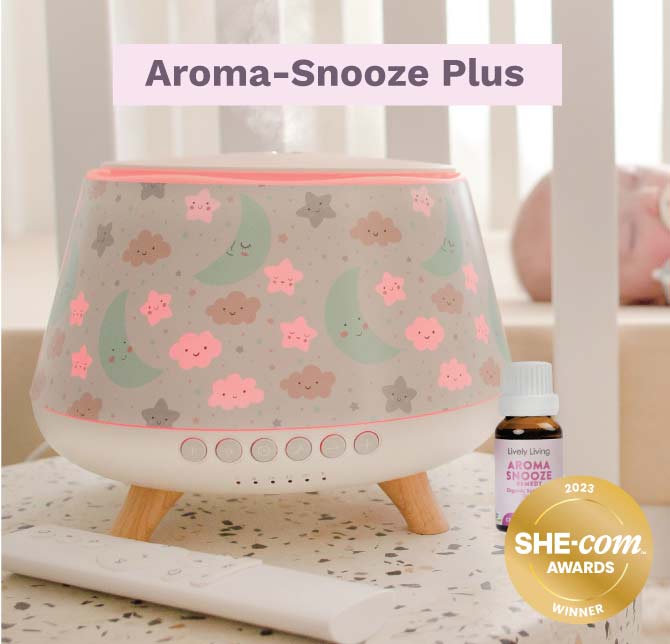
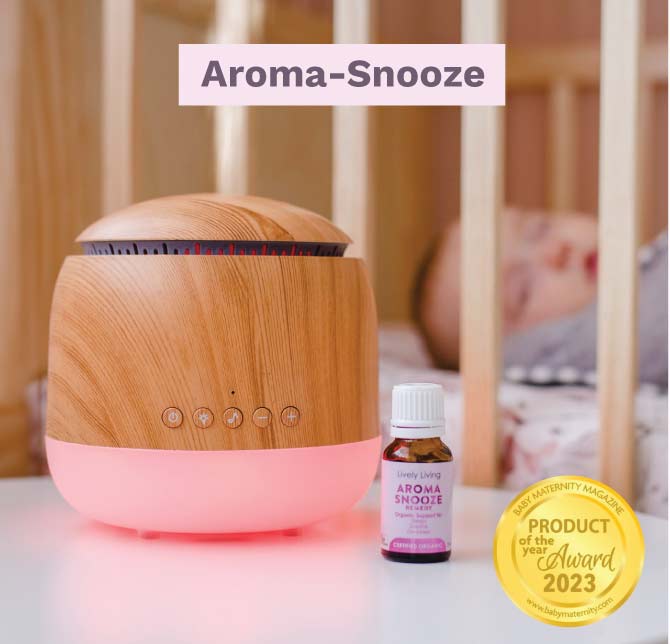

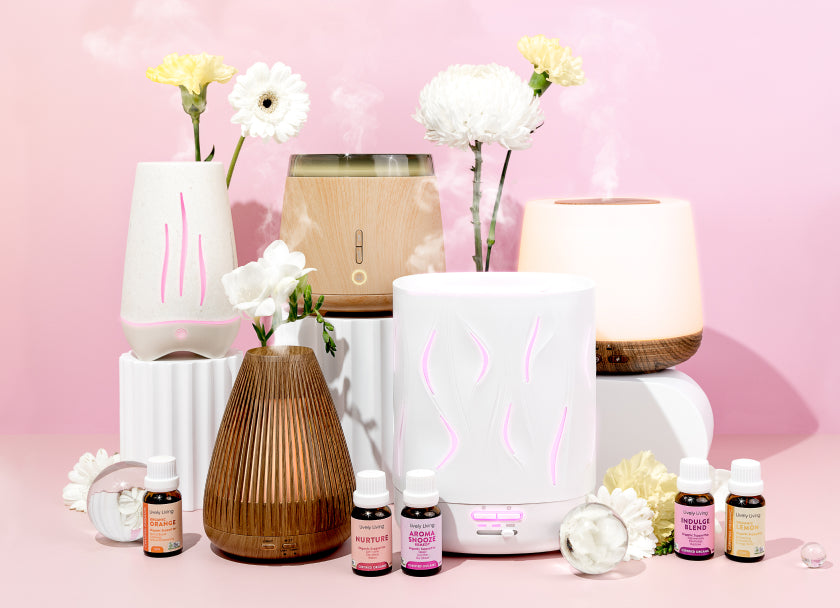
Certified organic essential oils are one of the simplest ways to know what you are really using.
In a market filled with terms like natural and pure, certification provides verified proof of how an oil is grown, processed, and handled from start to finish.
At Lively Living, certified organic oils are independently audited from source to bottle, giving you confidence in both quality and consistency.

Certified organic essential oils are derived from plants grown without synthetic pesticides, herbicides, or genetically modified inputs.
To qualify, oils must meet strict standards across farming, harvesting, and processing, with full traceability at every stage. Most certified products require at least 95% organic ingredients, with the remainder limited to approved natural substances.
This is what separates certified organic oils from products that simply use general terms like natural or botanical.
Without certification, there is no consistent standard behind what is written on the label.
Certified organic essential oils provide verified transparency, helping you avoid hidden additives, synthetic fillers, or unclear sourcing. They offer a more reliable benchmark for quality, especially for oils used regularly in your home or on your skin.
Not all oils labelled natural meet the same standard.
Natural oils may still be exposed to pesticides or processed using non-approved methods. Certified organic oils must meet strict, independently audited requirements at every stage.
If you want clarity and consistency, certification removes the guesswork.
Look for a recognised certification logo and clear ingredient listing.
Avoid vague descriptions that do not fully explain what is inside the bottle. Brands committed to certified organic standards are transparent about their sourcing, processing, and certification.
Certified organic oils reflect higher production standards.
They require more controlled farming methods, lower-yield crops, and ongoing certification audits. This can result in higher costs to the brand, but also ensures verified quality and accountability. However the end retail price is always decided by the brand itself and can vary. Lively Living are proud to offer very affordable Certified Organic essential oils with prices often more competitive in price than large corporate brands
Certified organic farming supports healthier soil, reduced chemical exposure, and more sustainable growing practices over time.
It is a more considered approach to both product quality and environmental impact.
Lively Living combines certified organic integrity with everyday usability at affordable prices.
All oils are independently audited from source to bottle, ensuring consistent standards across the range.
Lively Living organic oils are certified by the ACO, (Australian Certified Organic), one of the strictest certification authorities in the world.
Lively Living offers larger 15ml essential oils, providing greater value compared to standard 10ml products.
Trusted since 2013, the brand has supported hundreds of thousands of Australian homes with oils designed for real daily use and modern ultrasonic diffusion.
Shop certified organic essential oils
Discover essential oil blends for sleep and relaxation
Explore essential oils for breathing and seasonal support
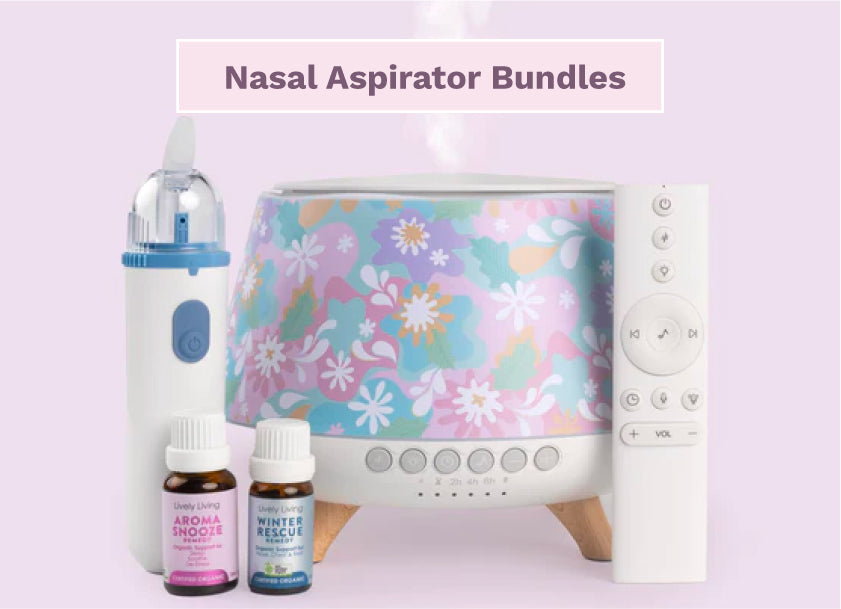
View essential oil and diffuser bundles
Learn more about how to use essential oils
Certified organic essential oils are made from plants grown without synthetic pesticides, herbicides, or genetically modified materials and must meet strict standards for sourcing, processing, and labelling
They are produced under stricter standards, offering greater transparency, more consistent quality, and verified sourcing
Look for a recognised certification logo and licence number, along with clear ingredient transparency
They require more controlled farming, lower-yield crops, and ongoing certification, which increases production costs but ensures quality
Some products may use the term loosely, but without certification there is no independent verification of standards
Pure is not a regulated term, while certified organic means the oil has been independently verified to meet strict standards
Organic farming supports healthier soil, reduced chemical use, and more sustainable agricultural practices
Certified organic essential oils are about verified quality, not assumptions.
They provide clarity in what you are using, stronger standards in sourcing, and a more reliable way to choose essential oils with confidence.