


 Back to all blogs
Essential Oils for Kids: Gentle Ideas for Stuffy Noses and Better Sleep
Updated October 2026 · Reviewed for safety and accuracy by the Lively Living team
It's 2am, your little one is snuffly and restless, and everyone in the house is wide awake. When a cold settles in, many parents look for gentle, natural ways to make their child more comfortable and help the whole family get some rest. Used carefully, a few essential oils can be part of a calm, comforting bedtime routine. This guide covers which oils suit children, which to avoid, how to use them safely by age, and the simple non-oil comforts that matter most.
Table of Contents:
- First things first: kids aren't small adults
- Gentle essential oils for kids
- Oils to avoid around young children
- How to use essential oils by age
- Comforting a stuffy nose
- Essential oils for better sleep
- When to see a doctor
- Frequently asked questions
First things first: kids aren't small adults
Children's skin is thinner, their airways are smaller and their bodies process essential oils differently to ours. Some oils that are perfectly fine for adults can be too strong for little ones, especially oils high in menthol or 1,8-cineole, which can affect a young child's breathing. So the rule for kids is simple: choose gentle oils, use fewer drops, diffuse rather than apply where you can, and always follow the label.
Gentle essential oils for kids
Lavender. Soft and floral, lavender is one of the most widely used oils for children's bedtime routines.
Roman chamomile. Sweet and apple-like, a lovely gentle partner for lavender at night.
Sweet orange and mandarin. Bright, cheerful citrus scents most kids love. Cold-pressed citrus can make skin more sensitive to the sun, so keep these to the diffuser.
Eucalyptus radiata. There are hundreds of species of eucalyptus, and they're not all the same. We chose Eucalyptus radiata because it's much gentler than the common Eucalyptus globulus, with a softer, sweeter scent, which makes it the eucalyptus many parents prefer for the family home. Use it diffused, at a low strength, in a well-ventilated room.
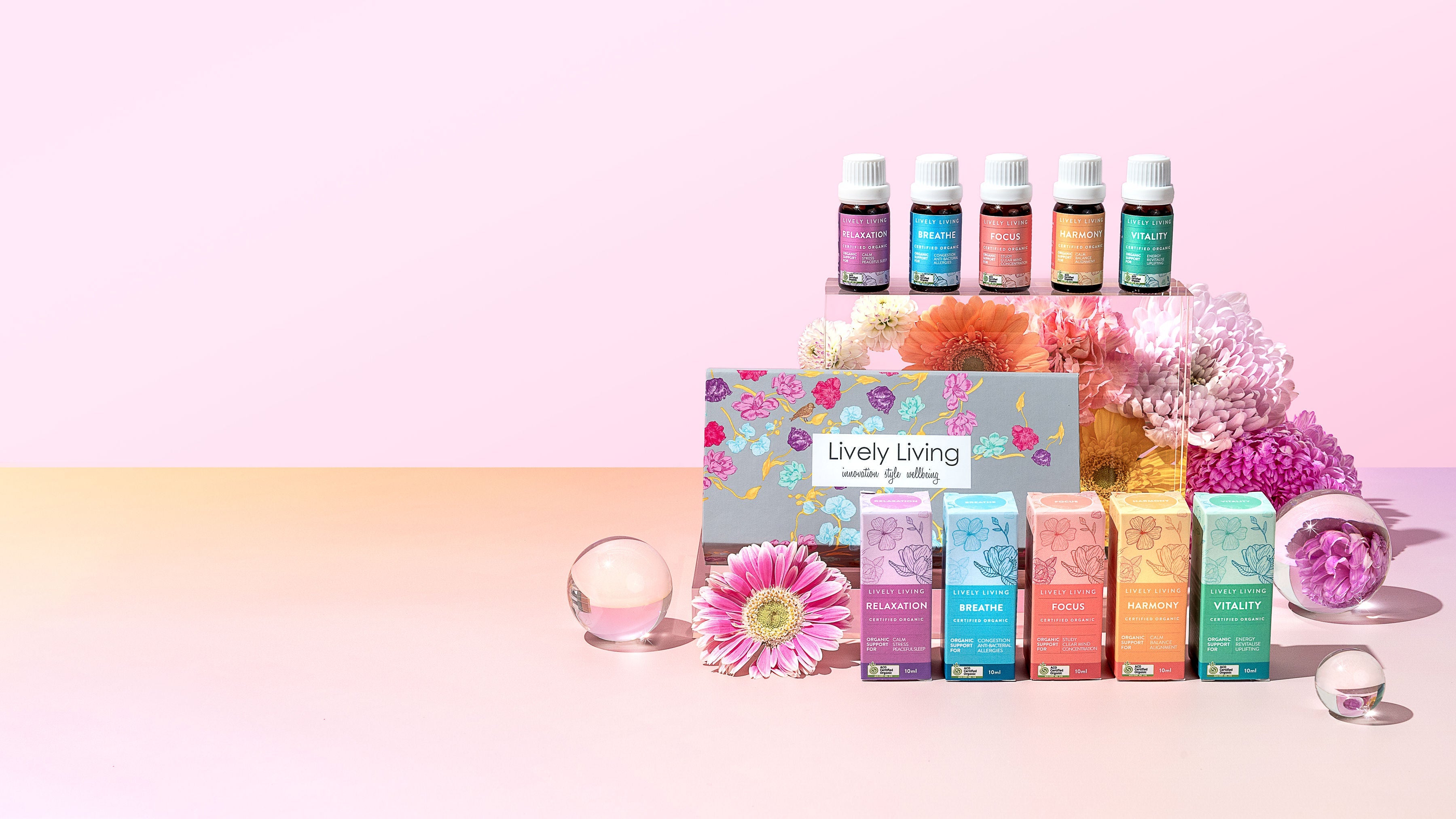
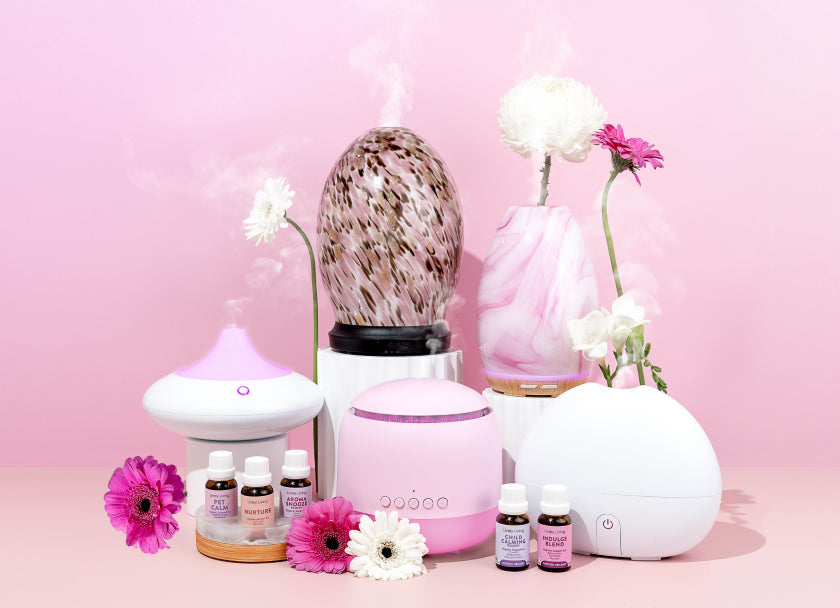
Blends made for children. Our children's blends are certified organic and made with gentle oils:
- Winter Rescue, a family favourite for diffusing in the cooler months
- Child Calming, for busy, overstimulated little minds
- Sensitive Child, for children who feel easily overwhelmed
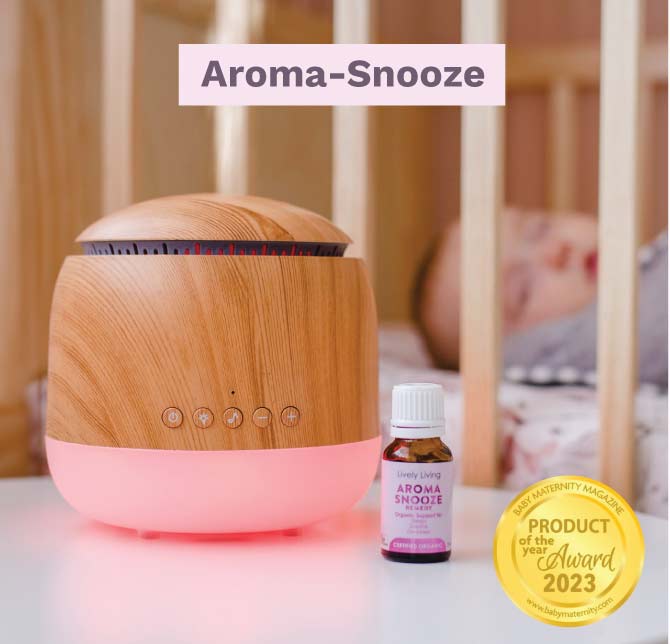
- Aroma Snooze, for a calm bedtime routine
Oils to avoid around young children
These popular oils are best kept for the adults in the house:
- Peppermint. High in menthol, which can affect breathing in babies and young children. Keep it away from children under 6.
- Stronger eucalyptus oils such as Eucalyptus globulus and Eucalyptus-Lemon. Choose gentle Eucalyptus radiata instead.
- Rosemary. Another high-cineole oil, better suited to adults.
- Oregano, clove, cinnamon and wintergreen. These are "hot" oils that can irritate skin and are not suitable for children.
- Clary sage. Best kept for adults.
And never use adult chest rubs or vapour rubs on babies or toddlers unless the label says they're suitable for that age.
How to use essential oils by age
Under 3 months. Avoid essential oils altogether. A newborn's skin and airways are very delicate.
3 months to 2 years. Check with your GP or child health nurse first. If you diffuse, use just 1 to 2 drops of a gentle oil or a blend made for children, in a well-ventilated room, for short sessions, and never in a closed room overnight. Keep the diffuser out of reach.
2 years and over. Diffuse 2 to 3 drops of gentle oils in a ventilated room. For skin, choose a ready-made children's balm, such as our Chesty Kiddy Balm (from 3 months) or Calm Kiddy Balm, or dilute well: no more than 1 drop of essential oil per 10ml of carrier oil.
For every age:
- never apply oils on or near a child's face, nose or hands (little hands end up in eyes and mouths)
- never let children handle essential oil bottles
- never give essential oils by mouth
- stop straight away if your child seems irritated, coughs more or doesn't like the scent
Comforting a stuffy nose
Essential oils are just one small part of comfort care. These simple steps make the biggest difference when your child has a cold:
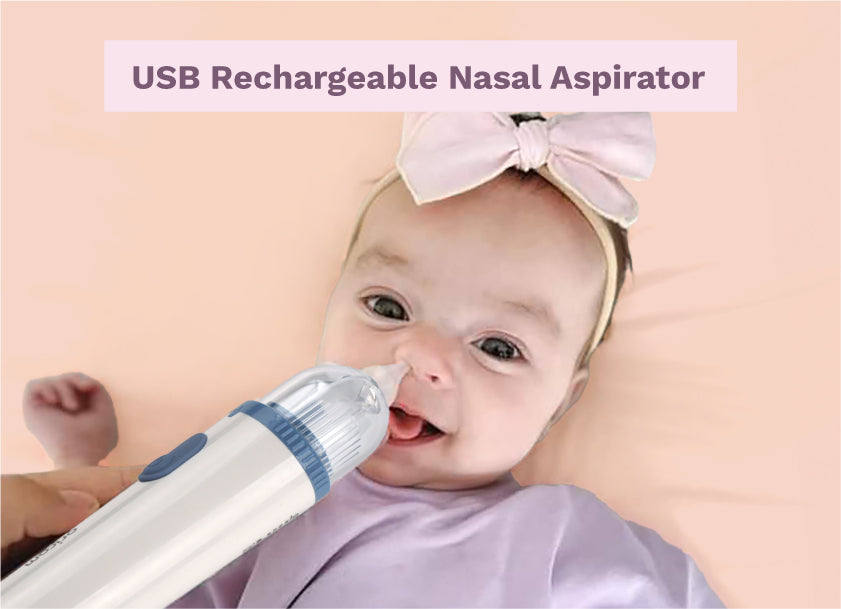
Step 1. Clear the nose. For babies and toddlers who can't blow their nose yet, a few drops of saline followed by a gentle rechargeable nasal aspirator clears mucus before feeds and sleep. Our nasal aspirator guide walks you through it.
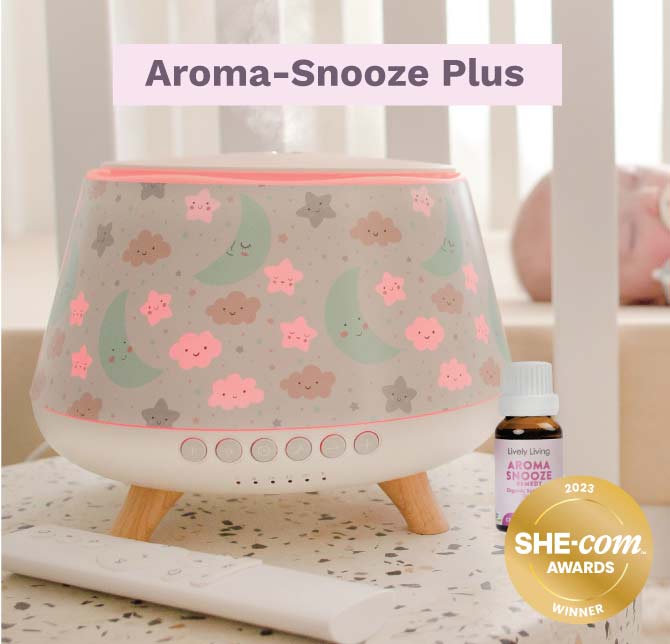
Step 2. Add moisture to the air. A cool mist humidifier keeps the bedroom air comfortable (read does a humidifier help with a snotty nose?). Our Aroma-Snooze Plus combines a cool mist humidifier, soothing sounds and a soft red night light.
Step 3. Offer plenty of fluids, and extra breastfeeds or bottles for babies.
Step 4. Rest and cuddles. Most colds in children clear up in 7 to 10 days. Raising Children Network has more on colds in young children.
Step 5. Keep sleep safe. Babies should always sleep flat on their back, with no pillows or wedges and no raised cot, even when they're congested. Red Nose has the full guidelines.
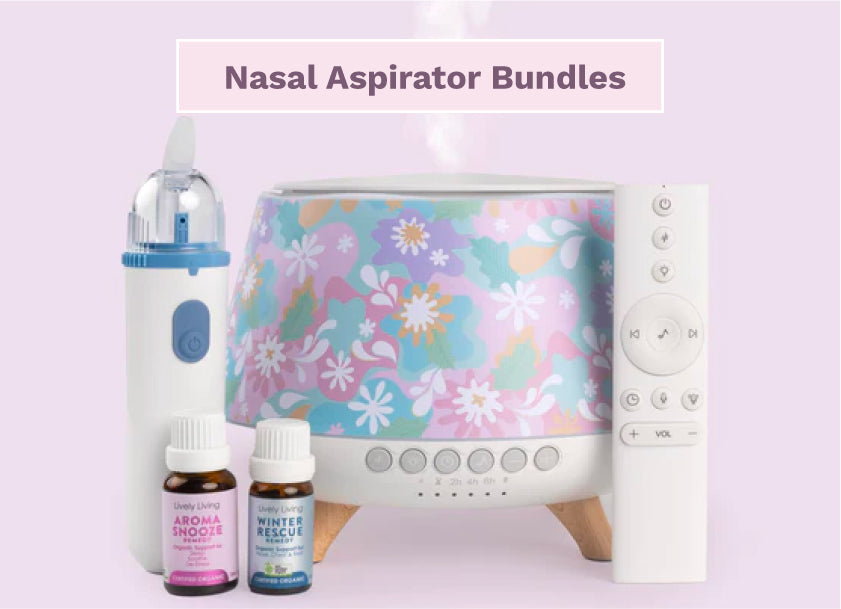
Cough and cold medicines aren't recommended for young children, so speak with your pharmacist or GP before giving your child anything. For a complete kit, our Sniffle Survival Bundle brings together the Aroma-Snooze Plus, a nasal aspirator and organic oils.
Essential oils for better sleep
A calm, predictable bedtime routine is one of the best things you can give a child, with or without a cold. A gentle scent can become part of that routine, a cue that it's time to wind down.
- Diffuse 2 to 3 drops of lavender, or a children's blend like Aroma Snooze or Child Calming, for 30 minutes before bed.
- Pair it with the same steps each night: bath, pyjamas, teeth, story, cuddle, lights down.
- A soft red night light is less stimulating than bright white or blue light.
Our Aroma-Snooze Plus brings these together in one bedside device.
When to see a doctor
See your GP if your child:
- is under 3 months and has a temperature of 38°C or more
- is drinking much less than usual or has fewer wet nappies
- has a cold that lasts longer than 10 days or keeps getting worse
- has ear pain, a high fever, or seems more unwell than you'd expect with a cold
Call 000 if your child is struggling to breathe, has blue or pale lips, or is very drowsy or floppy. If your child swallows an essential oil, call the Poisons Information Centre on 13 11 26 straight away, any time of day or night.
Frequently asked questions
What essential oils are good for congestion for kids?
Gentle Eucalyptus radiata, diffused at a low strength in a ventilated room, is a popular choice for children over 3 months, along with blends made for kids like Winter Rescue. Pair it with saline drops, a nasal aspirator for little ones and a cool mist humidifier.
Is peppermint oil safe for kids?
Peppermint isn't suitable for babies and young children because of its high menthol content. Keep it for the adults, and for children under 6, choose gentler oils instead.
What essential oils help kids sleep?
Lavender, Roman chamomile and sweet orange are popular gentle choices, along with blends made for children like Aroma Snooze and Child Calming.
Can I put essential oils on my child's chest?
Use a balm made for children and follow the age on the label. Our Chesty Kiddy Balm is suitable from 3 months. Never apply undiluted oils, and keep everything away from your child's face.
Can I use essential oils on a newborn?
No. Avoid essential oils for babies under 3 months. Saline drops, a gentle nasal aspirator and a cool mist humidifier are better options for newborns. See our guide to clearing a newborn's congested nose.
A stuffy nose and a sleepless night are part of family life, but they don't have to be miserable. Choose gentle oils, use them with care, and pair them with plenty of cuddles and rest.
Related reading
- Nasal aspirators for babies: benefits, how to use and safety tips
- Baby cold and flu FAQ: a parent's guide
- Does a humidifier help with a snotty nose?
- Soothing snotty noses with essential oils
Yours in health and happiness
Julie and the Lively Living team


