


 Back to all blogs
Diffuser Vs Vaporiser Vs Humdifier - What's the difference & the best for you?
Updated October 2026 · Reviewed for safety and accuracy by the Lively Living team
Diffuser, vaporiser, humidifier: you'll often hear these words used for the same thing, and it's easy to see why. All three turn water into a fine mist, and plenty of devices do more than one job. But there are real differences in what each one is for, how much moisture it adds and whether you can use essential oils in it. Lively Living pioneered cool mist ultrasonic diffusers in Australia in early 2013, so here's our plain-English guide to choosing the right one for your home.
Table of Contents:
- What is a diffuser?
- What is a vaporiser?
- What is a humidifier?
- Diffuser vs vaporiser vs humidifier at a glance
- Which one do you need?
- Can you use essential oils in a humidifier?
- Cleaning and care
- Frequently asked questions
What is a diffuser?
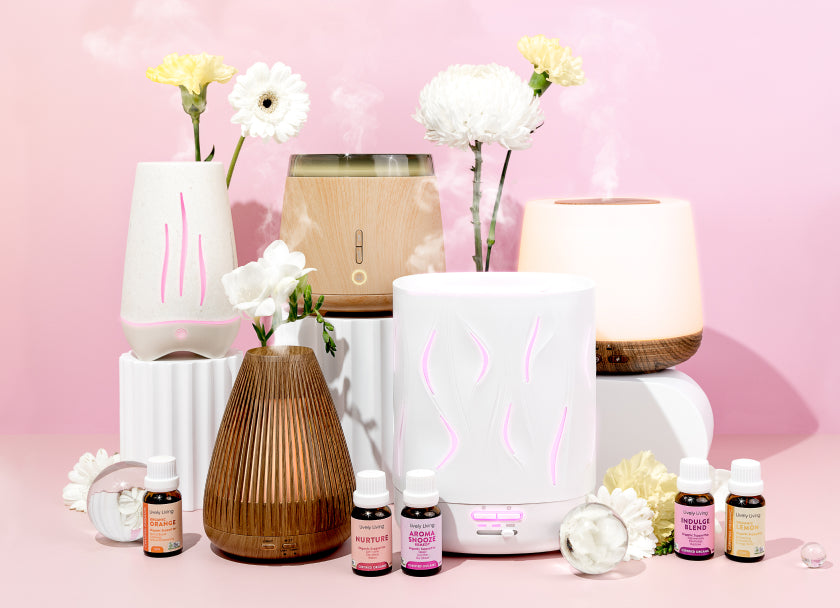
A diffuser is made to spread the scent of essential oils through a room. The most popular type is the ultrasonic diffuser, which uses gentle vibrations to turn water and a few drops of oil into a fine, cool mist. No heat is used, so the oils keep their natural aroma, and most models switch off automatically when the water runs low.
There are a few other types too:
- Waterless (nebulising) diffusers break pure essential oil into tiny particles without water or heat, for a stronger scent. Our Aroma-Oil Waterless Diffuser and Aroma-Ascension Waterless Diffuser work this way.
- Cordless diffusers run on a rechargeable battery, so you can take them from room to room, or into the car or office. See the Aroma-Recharge Cordless Diffuser.
- Heat and evaporative diffusers (oil burners, fan diffusers and reed diffusers) are simpler, but heat can change an oil's aroma, so we prefer cool mist.
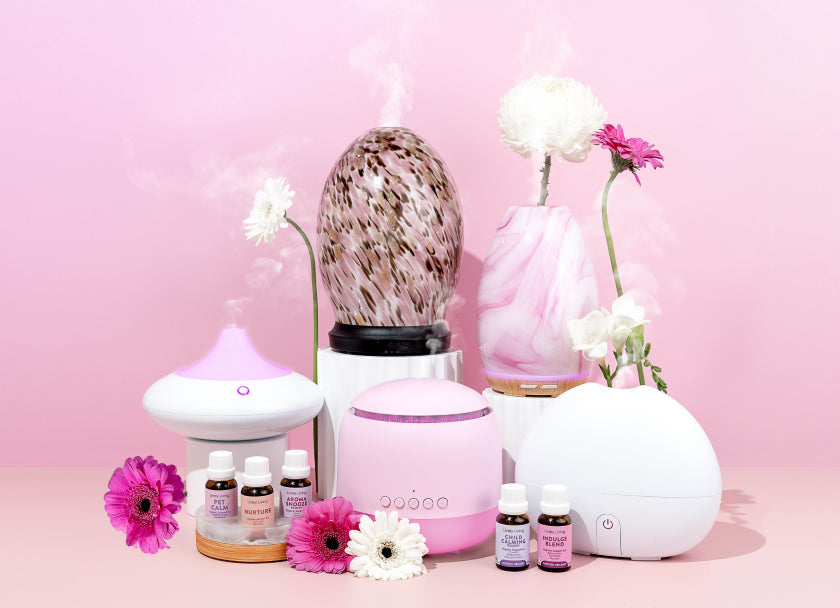
Diffusers come in all shapes and sizes, from decorative glass and ceramic styles to large, long-running diffusers that last all night. Our diffuser guide for beginners walks you through choosing and using one.

What is a vaporiser?
"Vaporiser" is the older Australian word for a machine that adds moisture to a child's bedroom. Traditional vaporisers boiled water to make steam. They were a household staple, but hot water and steam are a scald risk around children, and the warm, wet air could leave condensation on walls and windows.
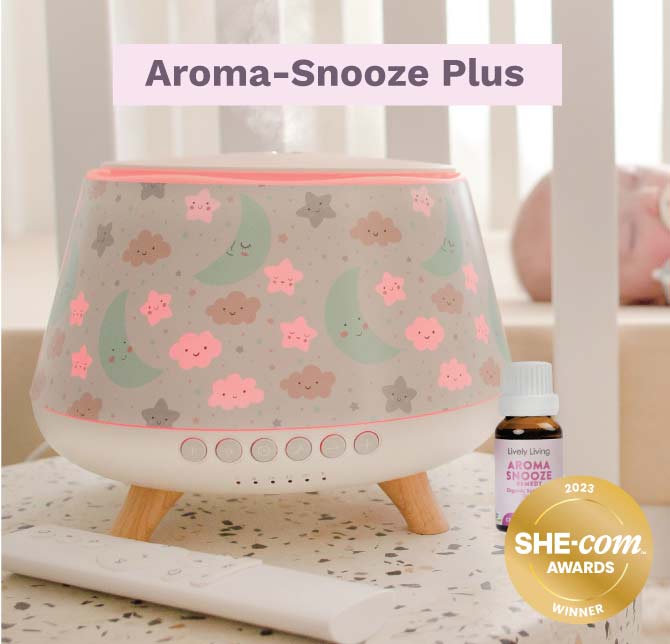
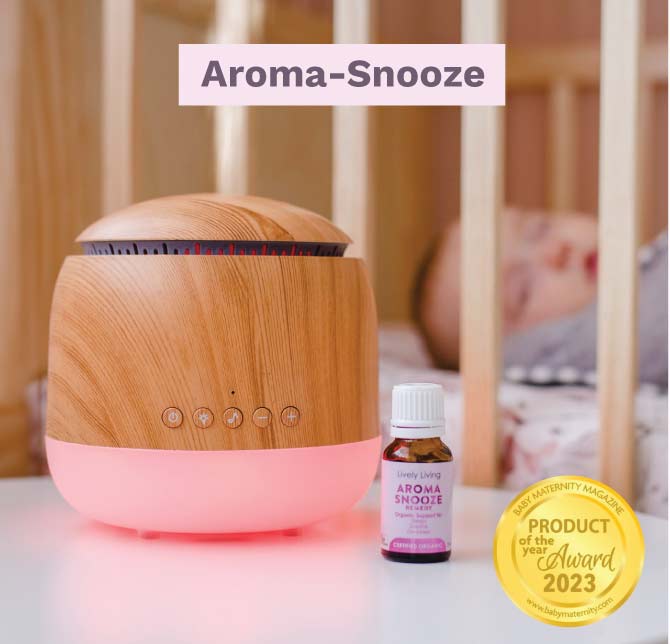
Today most parents choose a cool mist vaporiser instead, which uses ultrasonic technology to add moisture without any heat. Our award-winning Aroma-Snooze is a cool mist vaporiser made for the nursery, with built-in soothing sounds, a voice recorder and a soft red night light. The Aroma-Snooze Plus adds even more bedtime features. Read are humidifiers safe for newborns? for tips on using one in a baby's room.

What is a humidifier?
A humidifier's main job is to add moisture to dry air. Every ultrasonic diffuser adds a little moisture, but a humidifier has a bigger tank and puts out much more mist, so it can make a real difference to the air in a larger room, especially with heating or air conditioning running.
- Cool mist (ultrasonic) humidifiers are quiet, use no heat and are the safer choice around children.
- Warm mist humidifiers boil water to make steam. Some adults find warm mist soothing, but they're a burn risk around kids.
- Evaporative humidifiers use a fan and a wick or filter, which needs replacing.
Our Aroma-Haven Humidifier Diffuser has a 1.8 litre tank and a humidistat that keeps humidity at a comfortable level, and you can add essential oils too. The 700ml Aroma-Cloud Humidifier Diffuser is another popular choice for bedrooms, nurseries and living areas. See all our humidifiers.

Diffuser vs vaporiser vs humidifier at a glance
| Diffuser | Cool mist vaporiser | Humidifier | |
|---|---|---|---|
| Main job | Scent a room with essential oils | Comfortable air in a child's room, often with sleep features | Add moisture to dry air |
| Moisture added | A little | Moderate | The most |
| Essential oils | Yes | Yes, on models made for it | Only on models made for it |
| Tank size | Small to large | Medium | Large |
| Best for | Mood, ambience, a fresh-smelling home | Nurseries and kids' bedrooms | Dry climates, air conditioning, larger rooms |
Which one do you need?
Want your home to smell beautiful? Choose a diffuser. Ultrasonic diffusers suit most rooms, and waterless diffusers give a stronger scent.
Setting up a nursery or child's room? Choose a cool mist vaporiser like the Aroma-Snooze, with built-in night light and sounds for bedtime. Never use a hot steam vaporiser around children.
Battling dry air, dry skin or a scratchy throat in winter or with air conditioning? Choose a humidifier. Many people find it makes the air more comfortable, especially overnight. Read the benefits of a humidifier to learn more.
Worried about dust, smoke or pet hair? That's a job for an air purifier rather than a humidifier. Our guide to air purifiers vs humidifiers explains the difference.
Want both scent and moisture? A humidifier diffuser like the Aroma-Haven or Aroma-Cloud does both jobs in one.
Can you use essential oils in a humidifier?
Only if it's designed for it. Many standard humidifiers aren't made for essential oils, which can damage the plastic or clog the parts. Ultrasonic humidifier diffusers like ours are made to take a few drops of oil in the water. Check the instructions for your model.
Around babies and young children, keep it gentle: no essential oils for babies under 3 months, and for older children, check with your GP first and choose gentle oils like lavender or Eucalyptus radiata, or a blend made for kids. Our guide to essential oils for kids covers safe use by age.
Cleaning and care
Whichever you choose, keeping it clean matters. Standing water can grow mould and bacteria.
Step 1. Unplug the device and empty any leftover water after each use.
Step 2. Wipe the tank with a soft cloth and dry it.
Step 3. Once a week, fill the tank halfway with water and a splash of white vinegar, leave it for 15 to 30 minutes, then wipe, rinse and dry.
Humidifiers have bigger tanks, so empty and dry them daily and leave the vinegar solution a little longer when you deep clean.
Step 4. Gently clean the ultrasonic plate with a cotton bud dipped in vinegar.
Step 5. Make sure everything is completely dry before you store it.
Our step-by-step guide to cleaning your diffuser has more tips.
Frequently asked questions
Is a diffuser the same as a humidifier?
Not quite. An ultrasonic diffuser adds a little moisture to the air, but its main job is spreading scent. A humidifier has a bigger tank and adds much more moisture.
Which is better, a humidifier or a diffuser?
Neither is better; they do different jobs. Choose a diffuser for scent and mood, a humidifier for dry air, or a humidifier diffuser if you want both.
Is a vaporiser the same as a humidifier?
"Vaporiser" is often used in Australia for a humidifier in a child's room. Old-style vaporisers used hot steam; modern cool mist vaporisers use ultrasonic technology with no heat.
Can my diffuser be used as a humidifier?
It will add a little moisture, but not as much as a humidifier. For noticeably drier air, a humidifier or humidifier diffuser is the better choice.
Is it okay to sleep with a diffuser on?
Many people enjoy diffusing a calming oil like lavender at bedtime. Use a few drops, keep the room ventilated, and choose a model with an auto shut-off or timer.
Which is best for a baby's room?
A cool mist vaporiser or humidifier, placed out of reach and at least a metre from the cot. Never use a hot steam vaporiser around children.
Diffusers, vaporisers and humidifiers each have their place, and many homes end up with more than one. Choose the one that matches what you need most, keep it clean, and enjoy a more comfortable home.
Related reading
- Essential oil diffuser guide for beginners
- 10 benefits of a humidifier for your home
- Air purifier vs humidifier: which do you need?
- Are humidifiers safe for newborns?
Yours in health and happiness
Julie and the Lively Living team


