


 Back to all blogs
Aromatherapy Diffusers Guide: Understanding Benefits and Use
Updated October 2026 · Reviewed for safety and accuracy by the Lively Living team
An aromatherapy diffuser is one of the simplest ways to enjoy essential oils at home. But how does it actually work, why does a scent change how a room feels, and how do you create blends that smell beautiful together? This guide explains the science of scent in plain English, the benefits people enjoy from diffusing, how to set the mood with light and aroma, and how to blend top, middle and base notes like a pro.
Table of Contents:
- How aromatherapy diffusers work
- Why scent changes how we feel
- Benefits of using a diffuser
- Setting the mood with light and scent
- Blending top, middle and base notes
- Care and safety
How aromatherapy diffusers work
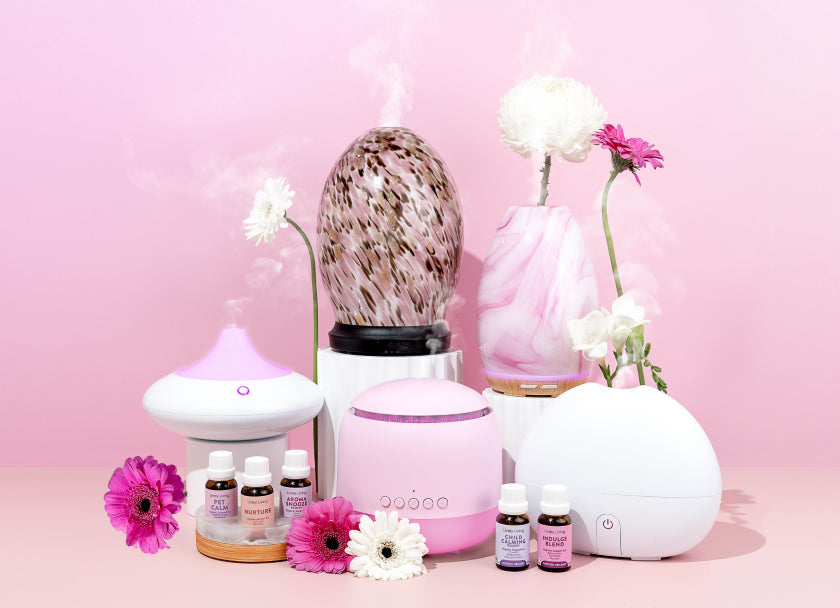
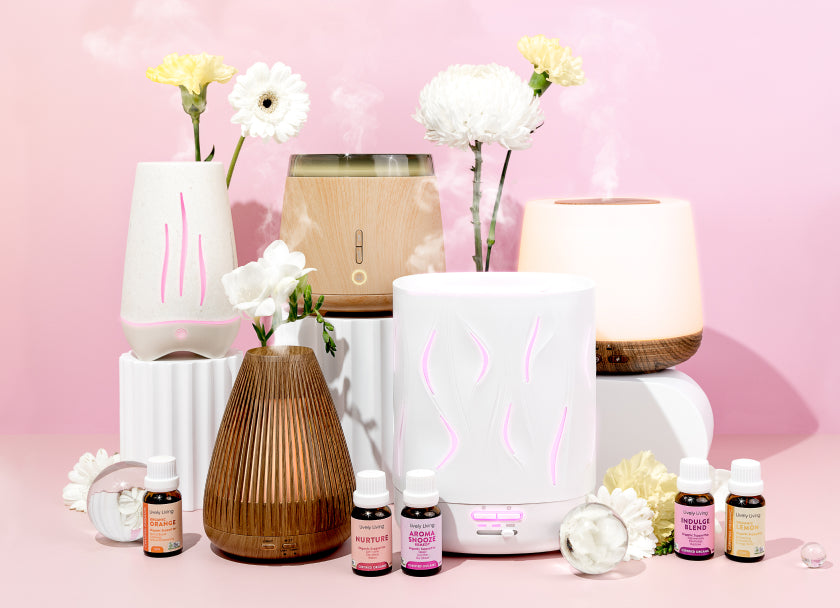
A diffuser's job is to release the aroma of essential oils into the air so you can enjoy it throughout a room. The main types work in different ways:
- Ultrasonic diffusers use gentle vibrations to turn water and oil into a fine, cool mist. They're quiet, need no heat and add a little moisture to the air. Read about the benefits of ultrasonic diffusers.
- Waterless (nebulising) diffusers break pure oil into tiny particles without water, for a stronger scent. See the Aroma-Oil Waterless Diffuser.
- Heat and candle diffusers warm the oil to release its scent. Heat can change the aroma, and an open flame needs care.
- Evaporative and reed diffusers let the oil evaporate naturally from a pad or reeds, for a gentle, subtle scent.
Not sure which suits you? Our diffuser guide for beginners compares them in detail.
Why scent changes how we feel
Our sense of smell is closely linked to the parts of the brain involved in emotion and memory. When you breathe in an aroma, scent molecules reach receptors high in your nose, which send signals straight to the brain's limbic system. That's why a particular smell can instantly bring back a memory, or make a room feel calm, cosy or energising.
It's also why scent is so personal. One person finds lavender relaxing; another loves the brightness of citrus. Research into aromatherapy is still growing, and essential oils aren't a treatment for health conditions, but many people find that a familiar scent becomes a helpful cue to slow down, focus or wind down for bed.
Benefits of using a diffuser
A safer way to enjoy oils
Ultrasonic diffusers don't use heat or a flame, so they're safer than oil burners and candles, and the oils keep their natural aroma. All Lively Living ultrasonic diffusers switch off automatically when the water runs low, and many have timers.
More comfortable air
Because ultrasonic diffusers use water, they add a little moisture to the air, which many people appreciate in dry winter months or air-conditioned rooms. For noticeably more moisture, a humidifier is the better choice; our guide to diffusers vs vaporisers vs humidifiers explains the difference.
A fresh-smelling home
Diffusing is a natural alternative to synthetic air fresheners and plug-ins. Fresh oils like tea tree, lemon and Eucalyptus radiata make a home smell clean and bright. If you want to remove dust, smoke or pollen from the air, though, you need an air purifier: see air purifier vs humidifier.
Rituals and routines
Diffusing the same scent at the same time each day, like lavender at bedtime or citrus in the morning, can become a simple ritual that signals it's time to switch gears.
Setting the mood with light and scent
Many diffusers double as soft lamps, so you can pair a scent with a colour to suit the moment.
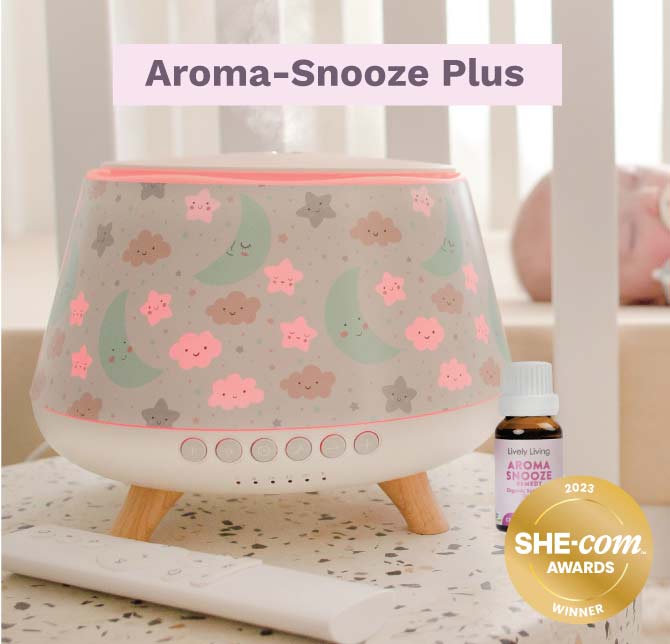
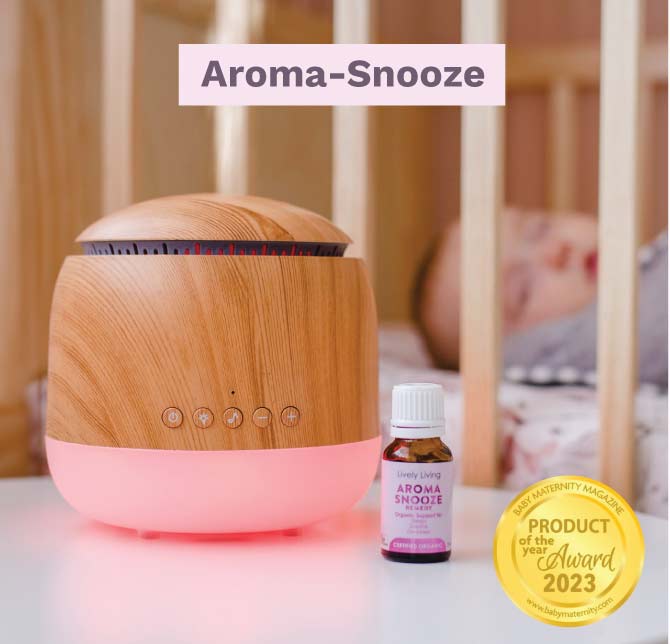
- Evening wind-down: lavender or Aroma Snooze with a warm amber, orange or red light. Warm, dim light is far less stimulating at night than bright white or blue light.
- Morning boost: sweet orange or lemon with a bright light.
- Focus time: rosemary or peppermint (adults only) with a cool white light.
- Meditation: frankincense with a soft, low light. Our Aroma-Frequency Sound Diffuser adds seven built-in Solfeggio tones and a warm orange light, so you can pair sound and scent in one device.
Mix it up with the seasons, the time of day and your mood, and notice what feels best for you.
Blending top, middle and base notes
Blending oils is a bit like making music. A balanced blend has three layers:
- Top notes are the first thing you smell. They're light and fade quickly. Think lemon, sweet orange, bergamot and peppermint.
- Middle notes are the heart of the blend. Think lavender, geranium and rosemary.
- Base notes are deep and long-lasting, and anchor the blend. Think frankincense, sandalwood, vetiver and patchouli.
A simple starting ratio for a diffuser blend is 3 drops top note, 2 drops middle note and 1 drop base note. Try these:
- Uplifting: 3 sweet orange, 2 geranium, 1 frankincense
- Calm: 3 bergamot, 2 lavender, 1 vetiver
- Fresh: 3 lemon, 2 rosemary, 1 Eucalyptus radiata
Keep notes of the blends you love so you can make them again. Prefer ready-made? Our certified organic blends are expertly balanced and ready to diffuse.
Care and safety

- Wipe out your diffuser after each use and give it a deeper clean with water and white vinegar every week or two. Our guide to cleaning your diffuser shows you how.
- Use pure essential oils only. Fragrance oils and carrier oils can damage a diffuser.
- Diffuse in sessions of 30 to 60 minutes in a ventilated room.
- No essential oils around babies under 3 months. For older children, check with your GP, use gentle oils and fewer drops, and avoid peppermint and stronger eucalyptus oils.
- Pets, especially cats, are sensitive to essential oils. Keep sessions short and make sure they can leave the room.
- If you're pregnant or have asthma or another health condition, check with your GP first.
For more, see our essential oil safety guide.
An aromatherapy diffuser is a small thing that can change the whole feel of your home. Choose a quality oil, experiment with blends and lighting, and create a space that feels like yours.
Related reading
- Essential oil diffuser guide for beginners
- Benefits of an ultrasonic aromatherapy diffuser
- How to use an essential oil diffuser for a fresh home
- Essential oil safety guide
Yours in health and happiness
Julie and the Lively Living team


